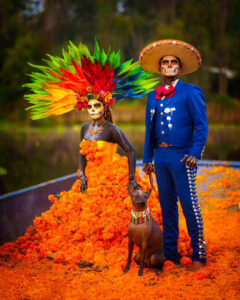
El Viaje de las Ánimas
“The Journey of the Souls”
I. The Origin of Sleep (February 2018)
It began with a dream—one that felt almost cinematic.
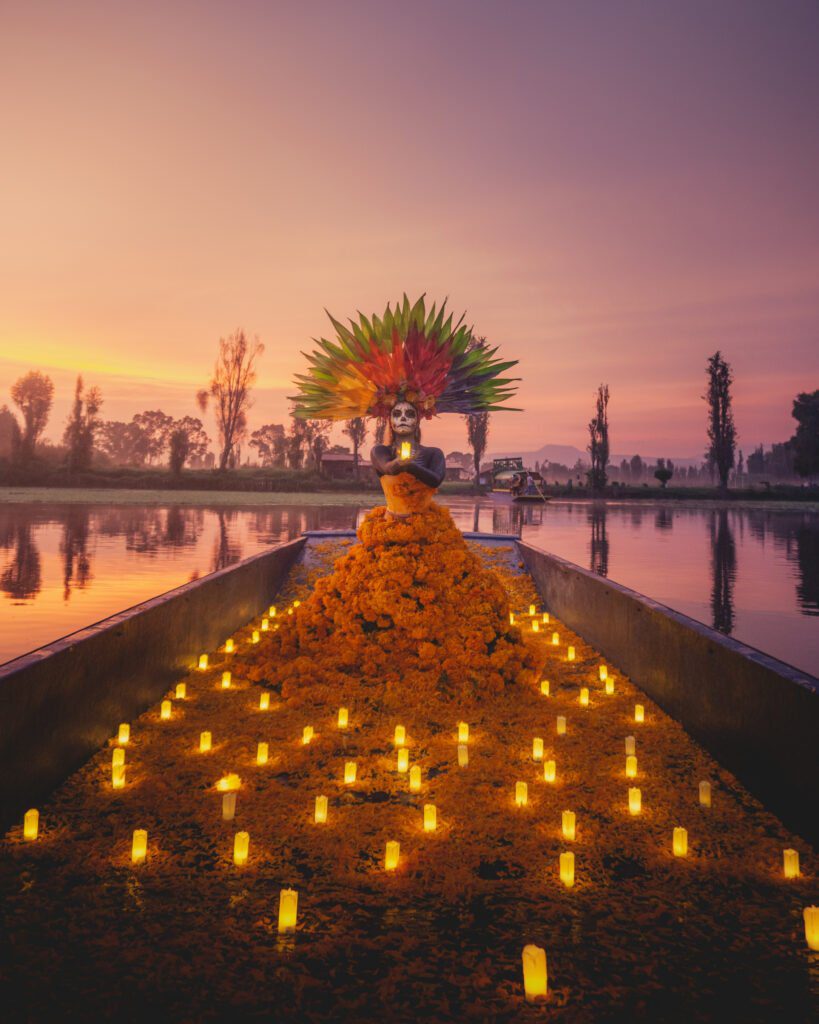
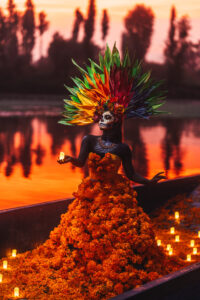
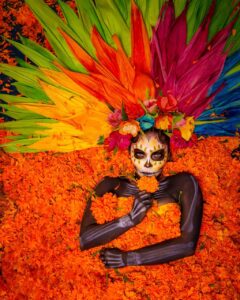
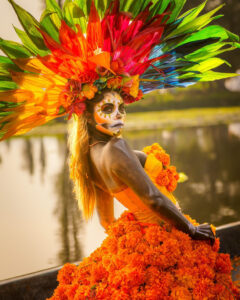
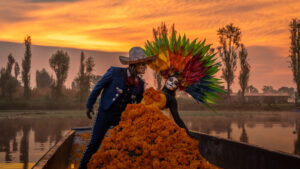
I imagined a lake covered in floating marigold flowers, illuminated by small candles drifting gently across the water. At the center, a majestic Catrina appeared on a trajinera, dressed in golden petals that shimmered as if they carried their own light.
It was more than a beautiful image. It felt like something that needed to exist.
From that moment, I knew I would create it one day. But I also understood that bringing it to life would require time, resources, and above all, the right people who could help shape every detail exactly as I imagined it.
So I kept that vision in silence for four years.
During that time, I immersed myself deeply in the world of Catrinas—discovering styles, meeting artists, and learning from talented hands that understood the power of detail.
Each encounter, each collaboration, and each step quietly brought me closer to a vision that never stopped living in my mind.
II. Planning and Equipment (2018–2022)
From the moment I dreamed The Journey of the Souls, I knew it would never be a simple production. It demanded time, planning, savings, and above all, patience to bring together the right team.
I never wanted this project to feel incomplete. I wanted to build it with intention—to honor Mexican tradition, protect every visual detail, and create something capable of moving people emotionally.
Over the years, I found the right companions: creatives, designers, photographers, and artisans who shared the same sensitivity for storytelling, beauty, and cultural meaning.
One of the first major decisions was to rethink the original vision. In the beginning, I imagined a lake completely covered with floating marigold flowers and lit candles, transforming the water into a living altar.
It was an extraordinary image—but also a complex one to execute at the level of quality I envisioned.
III. The Heart of the Project: The Cempasúchil Flowers
With the design already taking shape and the technical team prepared, the time came to secure the most essential element of the entire production: the cempasúchil flowers.
They could not be just any marigolds. We needed authentic, fresh flowers—flowers with origin, meaning, and the symbolic weight that this project demanded.
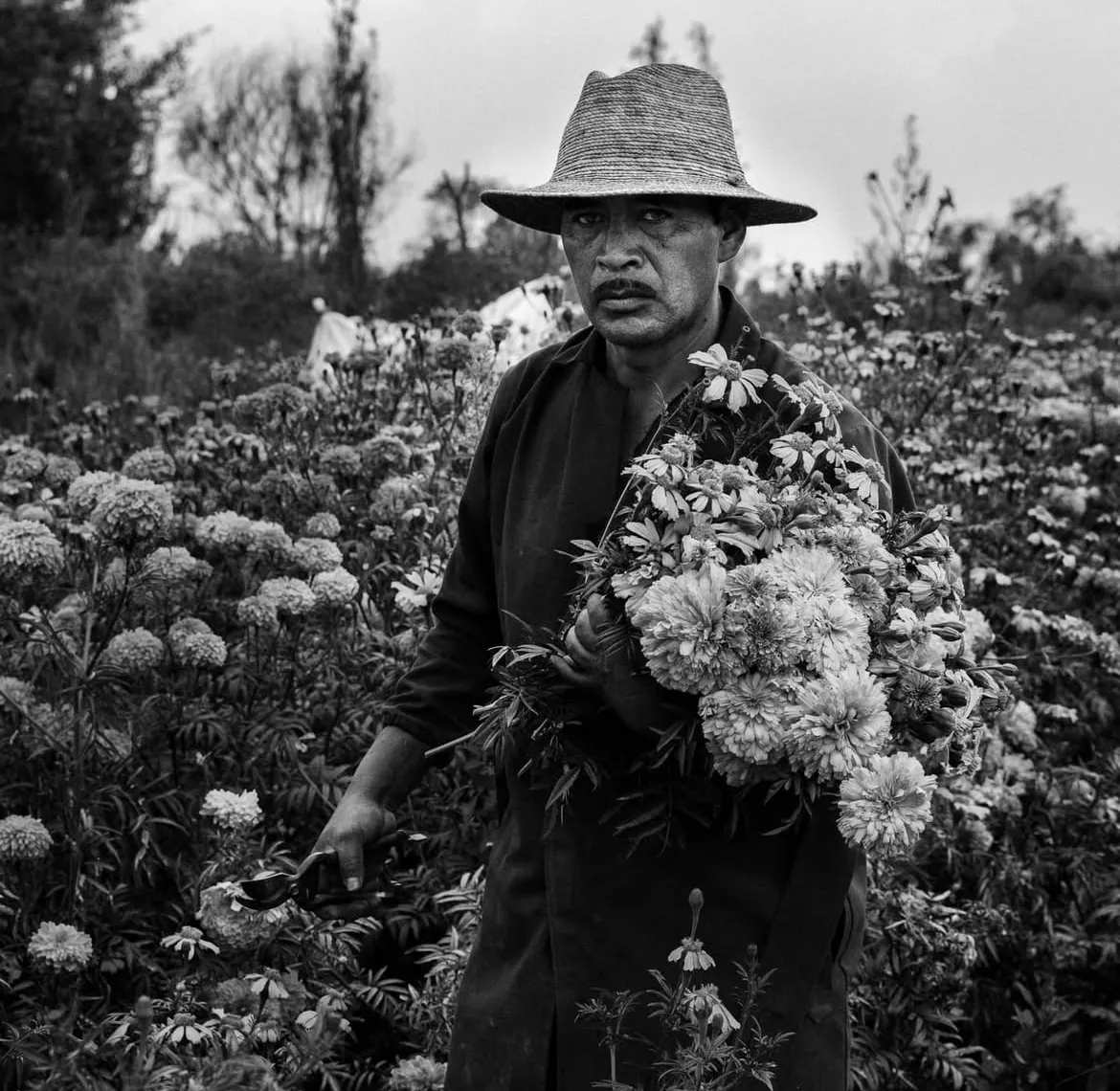
Thanks to Juan Pablo Puente (@_foxdie), a friend and photographer, we found the right person: Víctor González, a flower grower whose story was already connected to something deeply human.
Their first meeting happened during one of Mexico City’s most unforgettable moments—September 19, 2017, the day of the earthquake—while both were helping others. Years later, that encounter became part of this project.
Months before production, we visited Víctor and shared the full vision with him. He immediately understood its meaning and accepted without hesitation.
More than providing the flowers, he personally delivered them to the Cuemanco dock on the day of filming.
That gesture became something larger than logistics: it completed a project built with Mexican hands, memory, collaboration, and deep respect for tradition.
Because this work is not only about art—it is about keeping a living tradition in bloom.
IV. The Perfect Allies: DJI Mexico and the Air Team
On October 16, 2022, we had one of the most important meetings of the entire production: a strategic session with DJI Mexico.
That day, we began defining how to capture The Journey of the Souls from above—because telling this story from the sky required much more than simply flying drones.
We needed precision, sensitivity, and a team capable of understanding that every aerial movement had to feel intentional, almost invisible, yet emotionally powerful.
During that meeting, the full air operation started to take shape. Roles were assigned, technical possibilities were discussed, equipment was considered, and collaboration dates began to align.
A few days later, on October 20, another collaboration with DJI Mexico was already scheduled for a separate production.
But during that same moment, a new possibility emerged:
What if we also joined forces again on October 26—the most important filming day of the project?
V. The Air Team Takes Shape
The possibility remained on the table—and little by little, it began to take shape.
Soon after, on October 24, it was officially confirmed that Carlos Silva (@camezi) would also join the project as part of the visual team.
His visual sensitivity added value to specific moments, bringing a cinematic layer that enriched the emotional language of the story.
On the day of filming, the sky was in the hands of an extraordinary team.
Niveck Britto (@niveckbritto) operated the FPV drone, creating immersive movements that felt almost organic—as if a butterfly were crossing fields of cempasúchil.
@maarcosky led the wide aerial drone compositions, capturing the scale of the landscape, the trajineras, and the atmosphere surrounding every frame.
His perspective allowed the project to breathe—revealing not only the visual beauty, but the magnitude of everything happening on the water.
VI. The Guardians of the Underworld: Caifan and Catrina
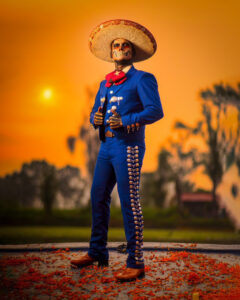
It is impossible to speak about The Journey of the Souls without mentioning two sacred presences that accompanied us throughout this creation: Caifan (@caifan.xolotl) and Catrina (@catrina.xolotl).
More than participants in the production, they represented something deeply ancestral—the spiritual memory of Mexico itself.
In the Mexica worldview, Xoloitzcuintles were believed to guide souls on their path toward Mictlán, accompanying them through the underworld.
Their presence in this project was never decorative; it carried symbolic weight, history, and spiritual meaning.
From the beginning, we imagined both of them beside our characters on the trajinera. But animals, no matter how noble or extraordinary, follow their own rhythms and personalities.
Neither of them was accustomed to moving across water in a canoe, which brought its own challenges—especially for Catrina, who reacted with visible restlessness to the movement and unfamiliar environment.
Caifan, however, already had some experience working with us from a previous production created alongside Río Roma.
Even so, his participation also required patience and adaptation, but little by little we achieved images that would later become some of the most iconic frames of the entire project.
Beyond photography, what both of them brought was presence, symbolism, and soul.
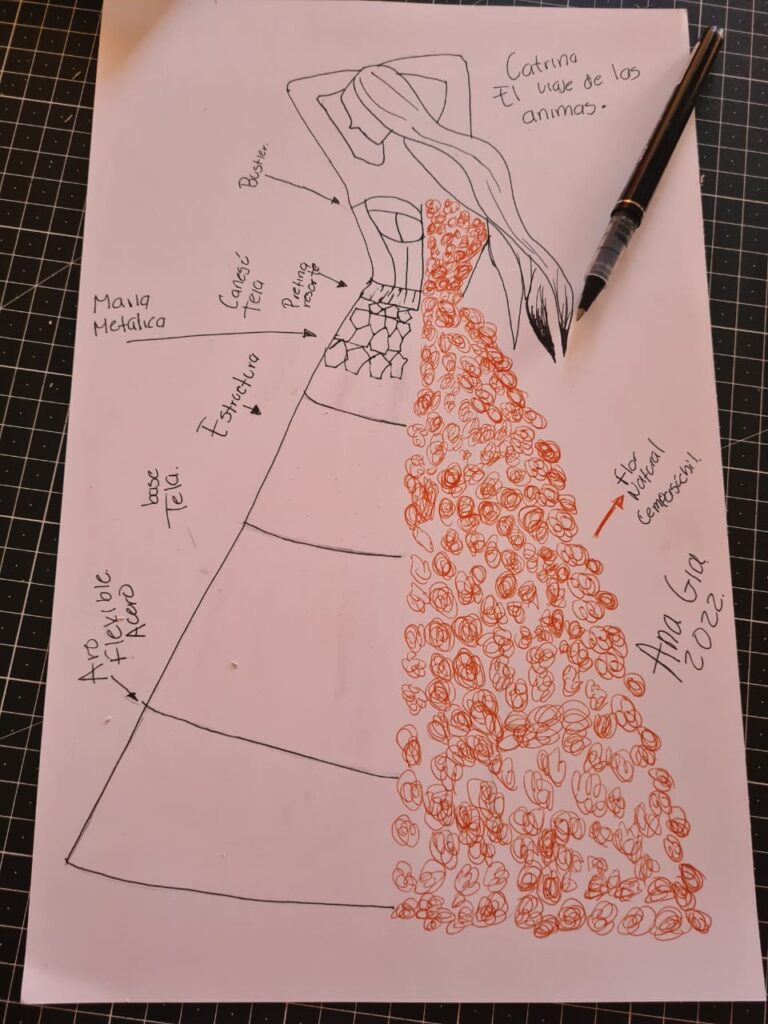
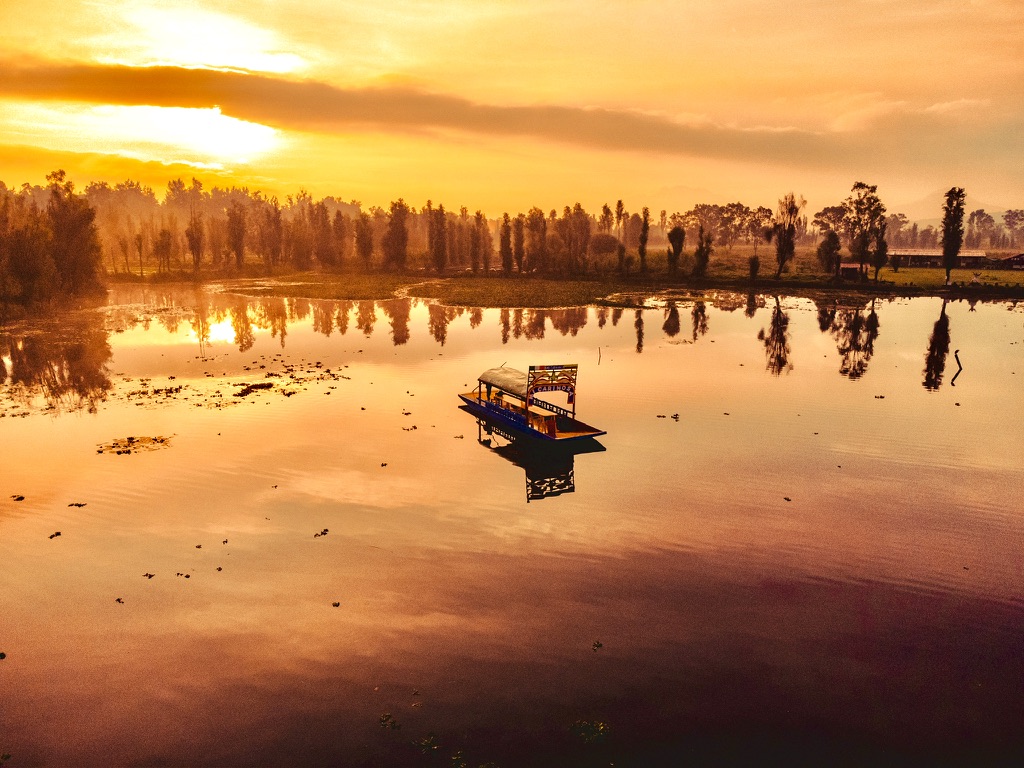
The trajineras were provided by @trajineras_tiocalles, who believed in the vision from the very beginning and supported us wholeheartedly. Thanks to them, we sailed for over 11 hours through a Xochimilco transformed into a floating altar.
Each flower was placed by hand. Each petal had a purpose.
The Catrina began to take shape while the moon still hung in the sky. And when the first rays of sunlight touched the water, the stage was ready. It was as if time had stopped to allow that moment to happen.
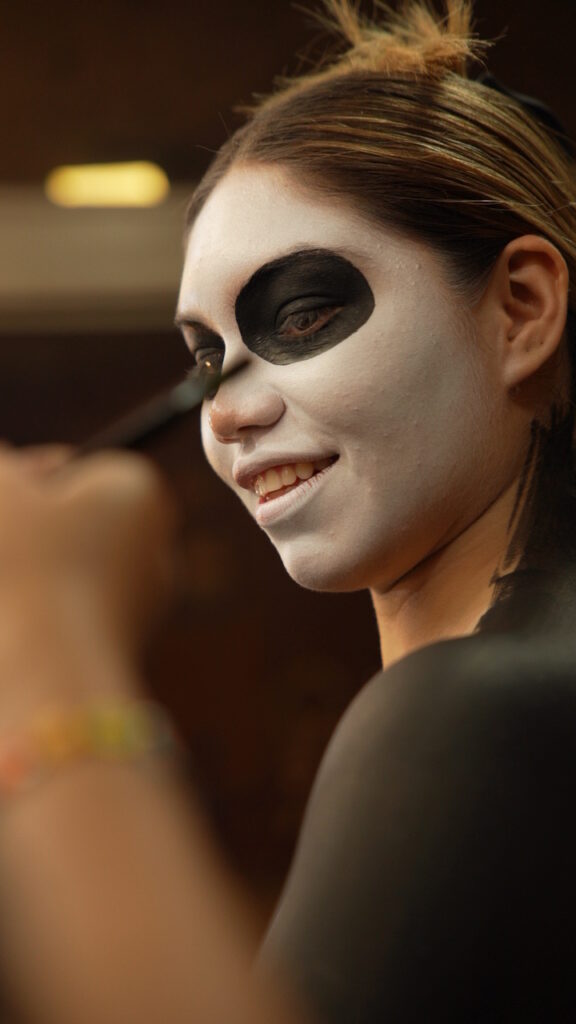
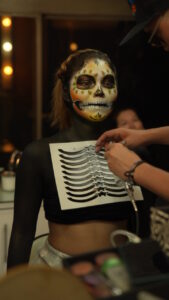
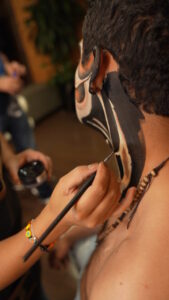
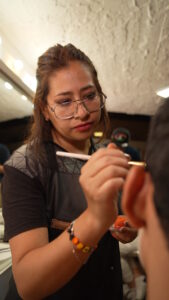
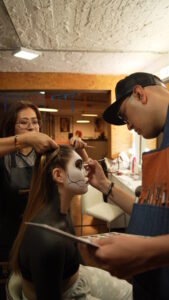
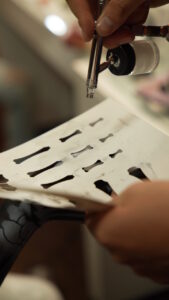
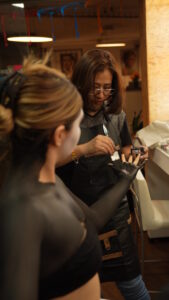
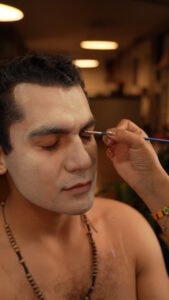
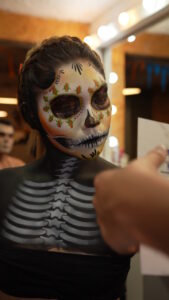
While all of that was unfolding in Xochimilco, another vital part of the project was taking place at the same time, miles away from the water.